Address
38 Eastwood Drive, Suite 401
South Burlington, VT 05403
Work Hours
Monday to Friday | 8AM—5:30PM EST

Address
38 Eastwood Drive, Suite 401
South Burlington, VT 05403
Work Hours
Monday to Friday | 8AM—5:30PM EST

Vanity phone numbers were doing what growth marketing claims to do decades before anyone used the term. A numbers that spells what you sell is a call to action people can carry in their heads, and it worked long before anyone could measure it. What change is that now you can measure it. The combination of a number people remembered with data that proves what it accomplished is why vanity numbers are back in advertising campaigns that had originally written them off.
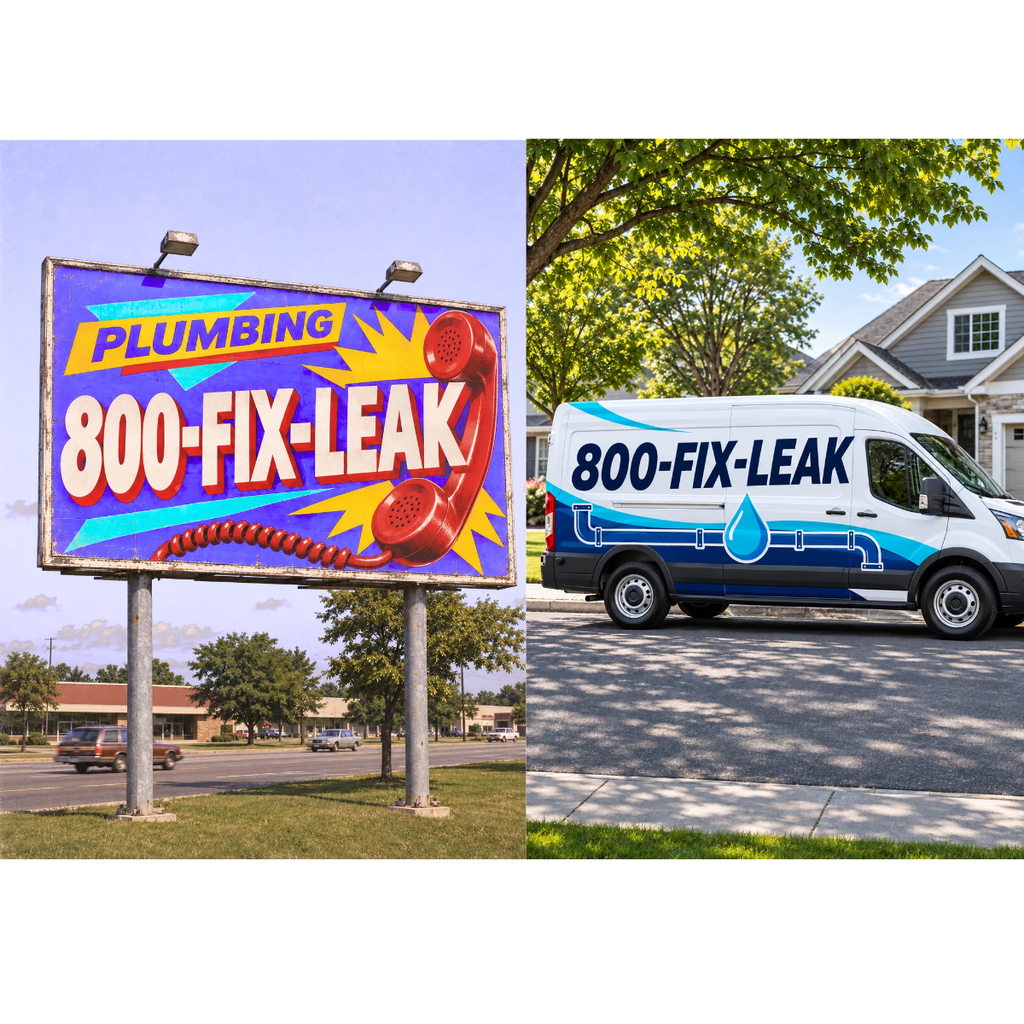
Long before conversion rates and click-through reports, advertisers understood a simple thing: the more people remember your number, the more they call you. Through the 1980s and 90s, vanity numbers were in jingles, TV spots, and billboards. They made small businesses sound established and gave large brands something people could repeat out loud.
Then the internet arrived and attention shifted to rankings, reach, and pixels. But the vanity number did not stop working. Rather, it stopped being counted, and anything a marketer cannot count tends to get dropped.
Digital campaigns favor web traffic, form fills, and retargeting, all of which are easy to attribute. Phone calls sat outside that system, so they looked like a black box next to a dashboard full of clicks.
The problem is that plenty of customer journeys never pass through a click path. The decision to call happens in a car after a radio ad, in the middle of a plumbing emergency, on a job site when someone passes along a referral, or during a commercial break. Those are the highest-intent moments and in each of them a number like 1-800-FIX-LEAK beats a URL nobody will retype later.
The number is the same idea it always was. Everything around it is different.
| Then, in the jingle era | Now |
| Ran on TV, radio, print, and billboards | Runs on all of those plus streaming audio, podcasts, paid social, and vehicle wraps |
| Calls were counted by hand, or not counted at all | Every call ties back to the campaign that produced it |
| Rang a desk phone or an answering service | Routes by location, department, or time of day |
| Notes went on a pad next to the phone | Calls are recorded, transcribed, and pushed into a CRM |
| Worked on memorability alone | Works on memorability plus attribution you can show a client |
| One number for the whole business | Separate numbers per campaign, region, or practice area |
Voice assistants and conversation search reward anything that is easy to say out loud. A number that spells a real world is easier to speak, easier to hear, and easier to recall then a string of seven random digits, which is a the same reason it work on the radio back in 1988.
A second reason is that recall is scarce. Between ad blockers, skipped pre-roll, and scroll fatigue, a spoken number is one of the few formats that survives all of it. It does not need to be clicked, loaded, or served.
A single vanity number works in paid search, on the radio, across a truck wrap, in direct, and on TV, all without ever changing form. That gives a campaign one recognizable point of contact instead of a different landing page for each placement. This means the recall compounds every time someone sees or hears it again.
For a worked example of what that looks like for a specific business, our roofing company case study covers how one contractor used a vanity 800 number to lift calls and look more established.
What you get now goes well past a catchy number. With 800response you can secure a quality vanity 800 number, track performance by campaign and platform with call tracking, route calls by location or department, record and transcribe conversations for quality, and push call data straight into your workflow.
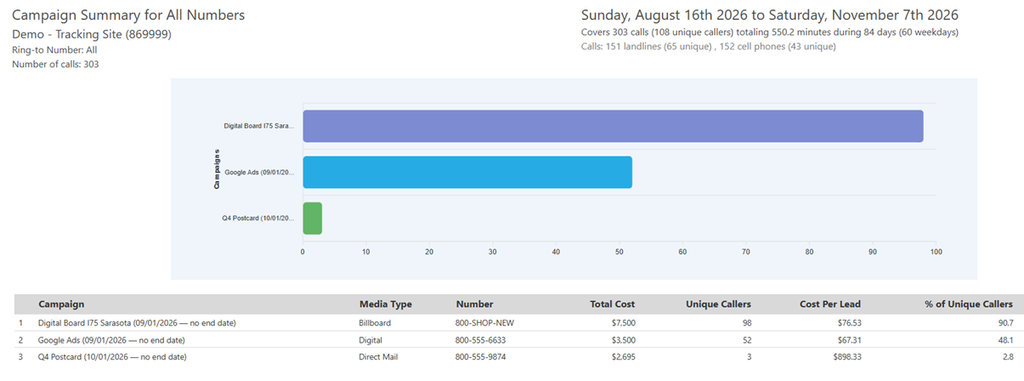
This is the part that makes the old idea new. The number brings the call and the system around it proves which ad paid for it.
They work best where the call is the conversion, which remains true in home services, legal, automotive, healthcare, and finance. The number is not competing with your website; it is capturing the people who would rather talk to someone than fill out a form.
No. Broadcast is where they started, but the same number works on vehicle wraps, billboards, direct mail, paid social, and search ads. The advantage is that one number covers all media.
Yes, and that is the part that changed. With call tracking each number reports its source, so you can compare a radio spot against a mailer the same way you compare two paid search campaigns.
Yes, when the word you want is open on it. 800 is the prefix people recognize first, so a strong phrase on 800 gives you both recall and credibility. If your first mnemonic choice is taken, a close variation of the word on 800 is usually the better trade.
Vanity numbers were built to be remembered. The difference now is that they can also be measured, which is the one thing they were missing when marketers moved on to digital. If your best leads still come through the phone, a number people can repeat is worth more than another landing page. See what is available by keyword, or talk to the 800response team about matching a vanity number to a campaign you are planning.